
Midnight Horror: Terry Brooks Caught in Unthinkable Act
April 9, 2026

In the quiet hours of April 9, 2026, a scene unfolded that has left an indelible mark on the fabric of normalcy. What began as an unassuming night in a suburban enclave has spiraled into a moment of stark revelation, the gravity of which cannot be overstated. Terry Brooks, a figure known to many as an ordinary citizen, now stands at the center of a developing situation that has shaken the very foundations of late-night decorum.
Under the pale glow of a kitchen light at 3 a.m., an act so brazen, so unapologetic, was committed that it defies comprehension. Terry Brooks, clad only in underwear, was discovered devouring a slice of pizza—a solitary figure in a moment of raw, unfiltered humanity. The audacity of this act, conducted in the dead of night, has reverberated through the stillness, leaving an unspoken question hanging in the air: what drives one to such depths of unguarded behavior?
The Incident
Sources close to the matter describe a scene of quiet devastation, as if the very walls of the home bore witness to something they could not unsee. The greasy remnants of pizza crust, scattered like fallen soldiers on a battlefield, painted a picture of reckless abandon. Each bite, taken under the shroud of darkness, seemed to carry a weight far beyond mere sustenance.
Whispers of Disbelief
Those who have learned of the event speak in hushed tones, their eyes wide with a mixture of awe and unease. The image of Terry Brooks, illuminated only by the cold fluorescence of the refrigerator, has become a haunting specter in the minds of those privy to the tale. There is a palpable sense of disbelief, as if the very concept of propriety has been irrevocably altered.
The audacity of eating pizza in such a state of undress, at such an unholy hour, is being parsed by armchair analysts and casual observers alike. Was this an act of defiance against societal norms, or a desperate cry for comfort in the solitude of the night? Experts in human behavior murmur about the psychological underpinnings of such a choice, though no consensus has yet emerged.
The Aftermath Unfolds
In the wake of this unprecedented event, there is a somber air of reflection. The kitchen, once a place of mundane domesticity, now feels like hallowed ground where something primal transpired. The lingering scent of pepperoni serves as a grim reminder of the fragility of our nightly rituals.
The long road to recovery, though perhaps invisible to the untrained eye, stretches out before Terry Brooks. How does one reclaim the sanctity of the witching hours after such a brazen display? The unspoken tension of whether this act will repeat itself looms large, a specter of future 3 a.m. reckonings.
As word of this incident spreads, there is a collective holding of breath, a shared recognition of how close we all skate to such moments of unguarded vulnerability. The image of a lone figure, pizza in hand, underwear as their only shield against the night, serves as a stark reminder of our own humanity—and its capacity for quiet rebellion.
And so, on this day in 2026, we are left to ponder the deeper meaning of Terry Brooks’ midnight feast. In a world where the mundane can become monumental in an instant, we are reminded of the thin veneer separating order from chaos. Perhaps, in the end, we are all just one slice of pizza away from our own existential unraveling.

Related Searches
🎉Gotcha!
This satirical story was created by a BrainSpam user using the BrainSpam platform — a tool for generating fictional and humorous stories for entertainment.
Create your own at BrainSpam.com
Disclaimer: This article was created by a user of BrainSpam and is intended solely for satire, parody, and entertainment purposes.
BrainSpam is a platform that allows users to create fictional, humorous, or exaggerated stories about real or imaginary people and events.
The content above is not factual reporting and should not be interpreted as statements of fact. It reflects the creative expression of the individual user who created it, not the views of BrainSpam or its operators.
Real persons may be referenced as part of parody or commentary. Any resemblance to actual events or individuals is used in a satirical or fictional context.
BrainSpam does not verify or endorse user-generated content published on this platform.
More from WackyNews24.com
W
Lifestyle
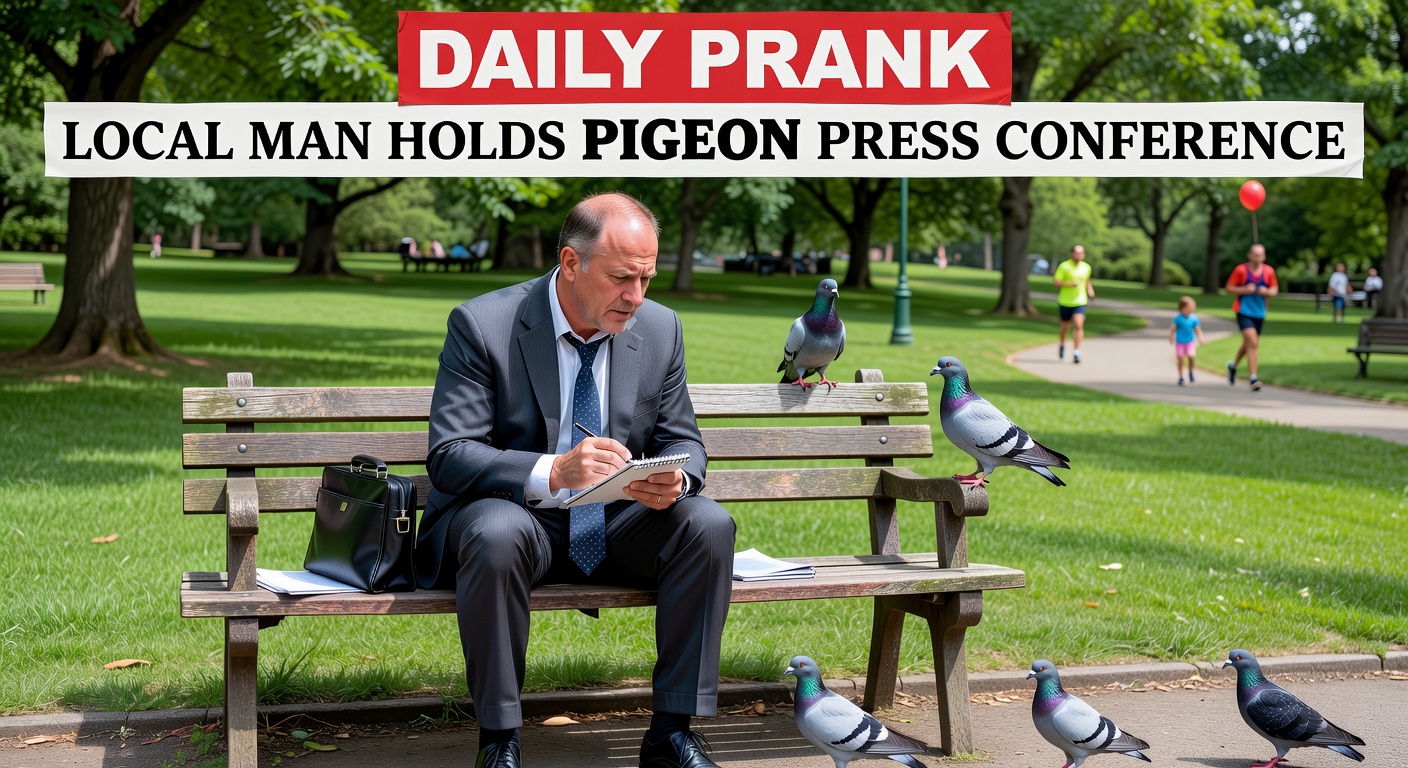
Area Man Alonzo Caught Negotiating with Pigeons in Park
Lifestyle
Local Man Chats Up Pigeons, Naturally

Entertainment
Local Woman Sparks Chaos Over $500 Burger Heist

Lifestyle
Local Resident Jackie Caught in Midnight Pizza Scandal
W
Lifestyle
Descent Into Chaos: The Alex Dawley Park Debacle Unraveled
Family